Yes, high pressure power washing can damage your roof shingles. The jet can knock off the protective granules, bend the edges and force water under the shingles where you cannot see it. The harm is often slow to show, which is why many homeowners only find out when a ceiling stain appears. If your roof has black streaks, there is a safer way to clean it, and this article explains both sides.
Why does high pressure hurt asphalt shingles?
Most homes in Greensboro have asphalt shingles. Each shingle is made of a base mat coated in asphalt and topped with small mineral granules. Those granules are not decoration. They shield the asphalt from sun, rain and heat, and they help the roof shed water.
A pressure washer shoots a narrow jet at high force. Aimed at a shingle, it can do several things at once:
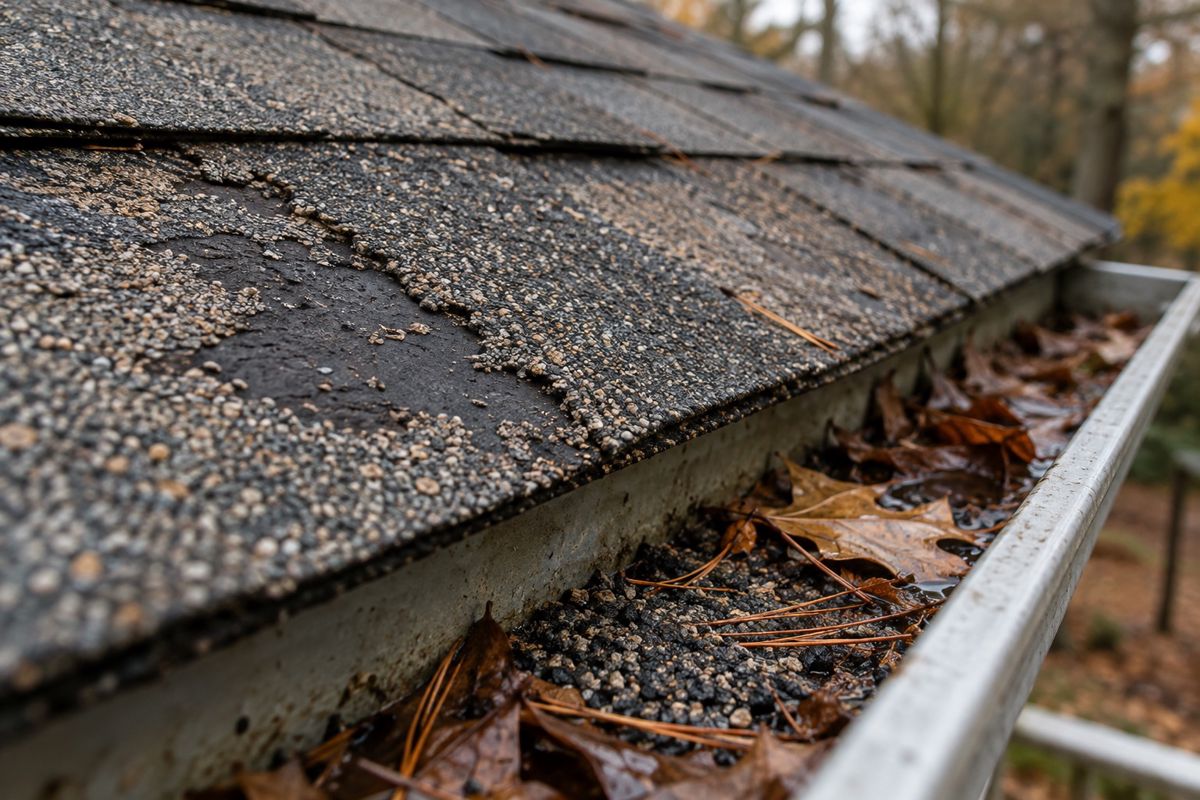
- Blast granules off the surface, leaving bare asphalt that ages quickly in the sun.
- Lift the edges of shingles and break the seal strips that hold them down.
- Drive water up and under the shingles, toward the roof deck.
- Loosen flashing, vent boots and the sealant around them.
Roofing manufacturers and industry groups generally advise against pressure washing asphalt shingles. It is worth reading the care notes that came with your roof.
What does the damage look like?
Pressure damage is not always obvious on the day. Look for these signs in the days and weeks after a wash:
- Granules collected in the gutters, in the downspout outlets or on the ground below the roof edge.
- Bald or dark patches where the surface granules are gone.
- Shingle tabs that curl, lift or no longer lie flat.
- Water stains on ceilings or walls, usually after the next heavy rain.
- Dripping or damp insulation in the attic.
Some roof makers also say that pressure washing can affect the warranty. Check your paperwork, and if you are unsure, ask the roofer who installed it.
What are the black streaks, and are they harmful?
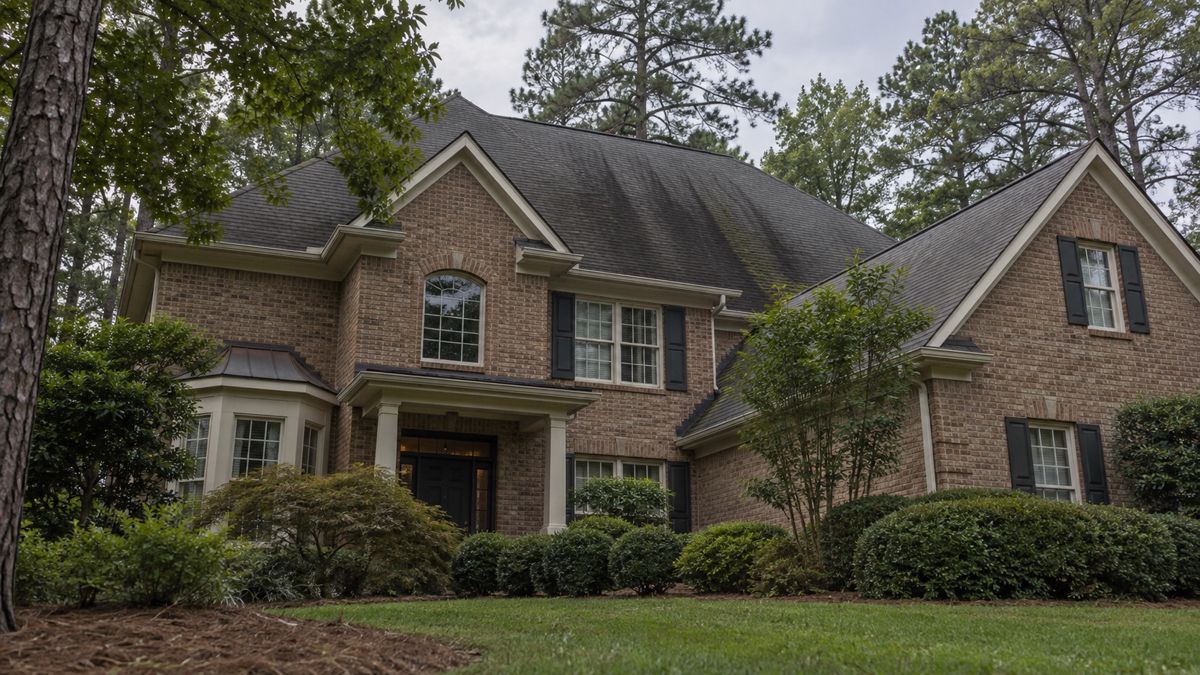
The dark streaks on many roofs in our area are a type of algae. It spreads on the wind, loves warm and humid weather, and feeds on the limestone filler in asphalt shingles. In Greensboro, it usually shows up first on shaded slopes and on the north side of the house.
At first the streaks are mostly cosmetic. They make a house look older and dirtier than it is. Over time, algae and moss hold moisture against the roof, and thick moss can lift the edges of shingles. That is why many owners want them gone.
The problem is that the usual instinct, grabbing a pressure washer, is the worst way to do it. You may remove the streaks and the granules at the same time, and the roof will wear faster than before.
What is soft washing and how is it different?
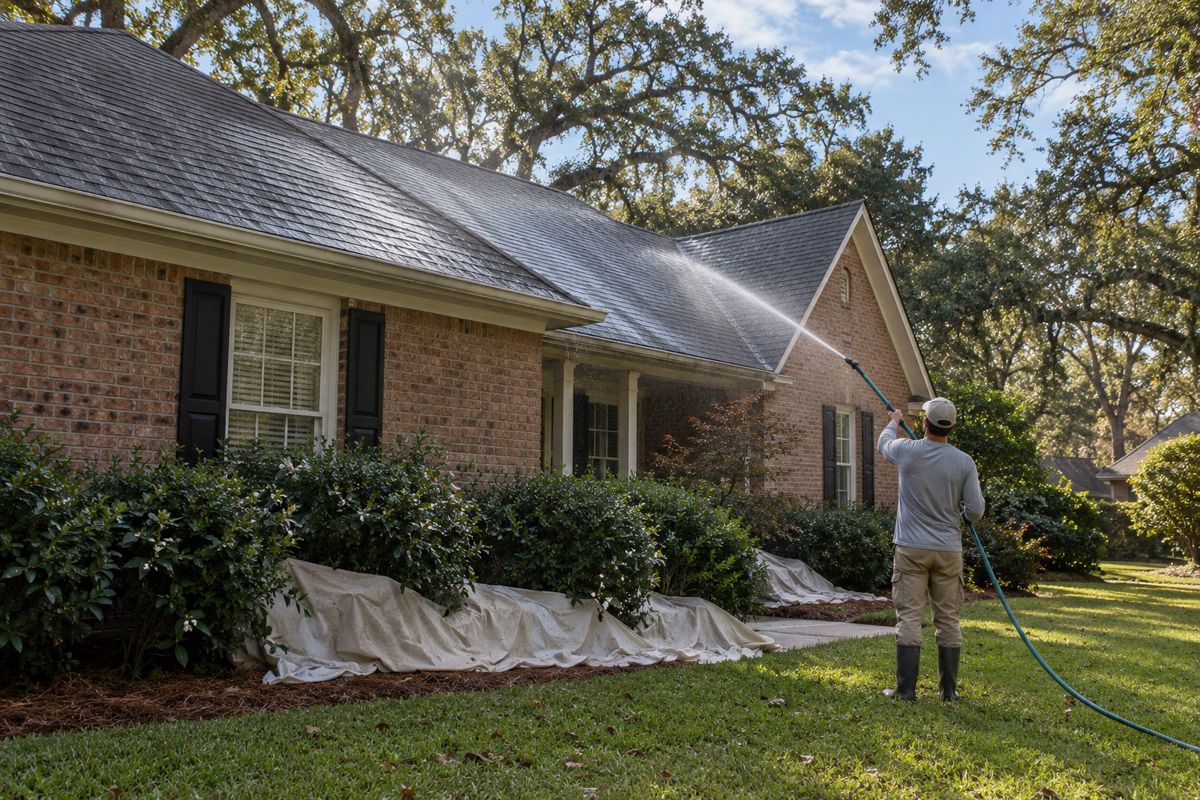
Soft washing cleans a roof at low pressure, about like a garden hose, with a cleaning solution that kills algae and moss. The solution does the cleaning, not the force.
- Plants and landscaping near the house are wet down and protected.
- The solution is applied to the roof.
- It sits for a short time so it can work.
- The roof is rinsed gently, along with gutters and the ground below.
The dead algae often fades over the following days or weeks as rain rinses it off. It is a slower result than a blast, but it leaves the granules where they belong. Soft washing is not a repair, and it cannot fix a roof that is already worn out.
Weather matters for this kind of work. Calm, dry days are best, because wind can carry the solution onto plants, cars or the neighbor's yard. Heavy rain right after a treatment can also dilute it. A careful crew watches the forecast and will move the job rather than rush it. That is a good sign when you are comparing contractors, because it shows they are thinking about the roof and not only the schedule.
Does the roof type change the answer?
Yes. Asphalt shingles are the most common and the most sensitive to pressure, but other materials have their own rules.
Older or worn shingles
A roof near the end of its life can shed granules even with gentle cleaning. A roofer should look at it before anyone washes it.
Metal roofs
Metal handles cleaning better, but high pressure can still force water under seams and scratch some finishes.
Tile and wood shake
Tile can crack under a boot or a strong jet, and wood shake splinters easily. Both need a specialist approach and low pressure.
How can I tell if a contractor will damage my roof?
A few questions will tell you a lot before you hire anyone:
- What pressure will you use on the roof? The right answer is low, like a garden hose.
- How will you protect my plants, gutters and landscaping?
- What is included in the written quote, and what is not?
- Can you show proof of licence and insurance? It is fair to ask any contractor this.
- What happens if the roof turns out to need repair?
Be careful with anyone who offers to blast the roof clean in minutes, or who will not explain the method. A good crew is happy to describe the process and put the quote on paper.
When should I call a pro and who should I call?
Call a roof cleaning crew when your shingles are in decent shape but look streaky, mossy or stained. Call a roofer when you see missing, curled or cracked shingles, bare patches or water stains inside the house. The two jobs are different, and cleaning will not stop a leak.
If you are in the Greensboro area and want the roof cleaned the gentle way, read about our roof cleaning service. Siding below a dirty roof often gets streaky too, so you may want to look at house washing at the same time. Call (336) 555-0141 or send the short form and we will give you a written quote.